Beginner shortlist
Best Longboard for Beginners: Good Reviews of Seven Boards
Picking a first longboard is harder than it looks, because a board that suits one rider is wrong for another. This page puts seven beginner-friendly boards side by side and then explains what actually separates them, so the choice stays yours.
Why a longboard makes a good first board
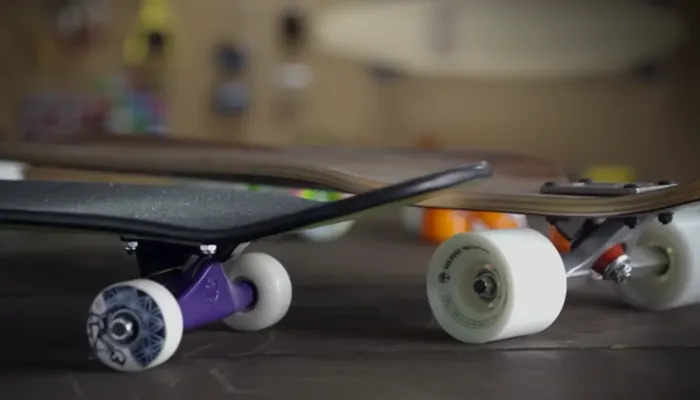
Longboards are an easy way into skateboarding, especially for anyone who does not want to start with tricks. The wide deck steadies you, the softer wheels give smoother turns and more control, and the price is usually friendlier than a complete street setup. You learn balance and pushing first, and the rest comes when it is wanted.
Seven beginner longboards
Apollo Longboard Skateboard
A 39-inch drop-through twin-tip deck of bamboo wrapped in fibreglass, which gives it a springy flex without losing strength. It rolls on 7-inch FatCat aluminium trucks, 70 x 51 mm wheels of 83A hardness and ABEC 9 bearings, and the deck carries printed artwork.
A medium length with a lot of forgiveness: easy to steer, steady at speed, and a good everyday cruiser. The listing mentions LED-lit wheels on one variant. The one complaint to expect is practical: the board is wrapped tightly and a bearing arrived stuck, so check the wheels before the first ride.
Fish Skateboards 41-Inch Downhill Longboard
A 41 x 9 inch maple board with a listed weight limit of 330 lb. The deck is stiff and wide, so a new rider gets a stable platform, and it is strong enough that an early fall does not end the board.
It suits skaters of every level but runs best for riders up to about 180 cm tall. If you are taller, a longer wheelbase will feel better under your feet.
Oudew Longboard Skateboard 41 inch
A 41-inch full-size deck of eight plies of Canadian maple on aluminium trucks, with a vintage-style graphic. The length makes it steady and the braking easy to learn.
It is a budget board for easy riding: smooth, with pleasant turns. Anyone who plans to bomb hills will want something sturdier.
Volador Freeride Longboard Cruiser
A 41 x 9.5 inch freeride cruiser with 50 mm anti-shock polyurethane wheels, ABEC-9 bearings and PU bushings. The listing recommends it for adults, teens and children from five years old, and a skate tool for maintenance is in the box.
The deck flexes enough to absorb bumps, so it handles rough paths better than a stiff one, and the wide shape leaves room for practising turns. As with Oudew, steep descents are better left to a sturdier setup.
Minority Downhill Maple Longboard
A 40-inch drop-deck of eight-ply maple with a 37-inch wheelbase, stiff and predictable, aimed at riders who want speed. The low platform makes higher speeds feel controlled, and the listing says a braking system can be fitted.
It is the most speed-minded board here, so it is the one to choose only if you expect to ride downhill soon. The bearings it ships with are modest and may need replacing early.
Transona Longboard 31 Inch Pro
The smallest of the seven: a 31-inch eight-layer maple deck with a black grip belt, A356 aluminium alloy trucks, polyurethane cast wheels and ABEC-9 bearings. Oversized wheels improve its manoeuvrability, and a listed capacity of 180 lb is the lowest of the group.
A light, easy board for commuting and short rides. The weak spot is the surface finish: the paint started to wear off sooner than buyers expected.
Sola Bamboo Premium Graphic Design Complete Longboard
A 99 cm bamboo deck with all-aluminium trucks, reverse kingpins and clear grip tape that shows the artwork. The light build makes it easy to carry around town or campus, and the reverse kingpins make turns at speed more controllable.
It is easy to turn and ride even for a first-timer. Its bearings are the weak point: they lose momentum quickly, so budget for a better set.
Specifications above come from the product listings, so a board sold later may differ in small details. Weigh the weak points as seriously as the strong ones: nearly every board here is cheap in the same place, the bearings.
What to check when choosing
Mount type
Drop-through mounts sit the deck lower between the trucks, which lowers your centre of gravity and steadies the board on uneven ground. Top-mounted boards give sharper turns and are the usual choice for freestyle riding.
Deck shape and size
Cruisers are shorter and wider, with playful features for carving. Downhill decks are longer and narrower for stability at speed. Longer decks are steadier, wider decks give more control on rough surfaces.
Wheelbase
A short wheelbase makes the board nimble and suits freestyle; a longer one settles the ride and suits speed runs.
Flex and profile
A stiff deck is calmer at speed, a softer one is kinder for carving and tricks. Taller decks are stabler for downhill; lower ones are easier to push and to step off.
Wheels
Larger wheels give grip and roll over bumps; smaller ones accelerate and turn faster. Softer wheels cope with rough roads, harder ones with smooth surfaces.
Trucks
Reverse kingpin trucks are more stable at speed, traditional kingpin trucks carve tighter and suit freestyle.
Which type suits a beginner
Choose for stability and comfort first. A broader deck and a low centre of gravity give the steadiest feel, and soft wheels give the smoothest ride and the best grip, which matters most in the first weeks. After that, match the shape to the style you expect to ride: cruising, downhill or freestyle.
Typical measurements by board type
| Type | Length, in | Width, in | Shape | Wheels |
|---|
| Cruiser | 32-42 | 8-10 | Symmetrical or asymmetrical | Soft, 78A to 87A |
|---|
| Downhill | 37-43 | 9.5-10 | Symmetrical or directional | Medium, 80A to 83A |
|---|
| Freestyle | 35-42 | 7.5-9.5 | Varies with the tricks | Medium to hard, 83A to 88A |
|---|
The first weeks on a board
The drop-through is the easiest to learn on
Its low centre of gravity makes balance and control simpler, so it is the usual first choice.
Starting is easier than it looks
Practise on flat, smooth ground and move to harder terrain gradually. Pushing and stopping come first; everything else builds on them.
Longer boards ride steadier, shorter ones turn quicker
A longer deck gives more room and a steadier surface, so a new rider is less likely to wobble at higher speed. It is a little harder to steer round tight corners, and the final choice depends on your style and comfort.
Flexible decks turn more easily
A deck with some flex and responsive trucks lets you shift weight and carve smoothly, though turning also depends on skill and practice.
Put function before looks
A larger board with softer wheels gives better balance and a smoother ride on uneven surfaces. At this stage balance and basic riding are the goal, so function matters more than the artwork.
Conclusion
The best longboard for a beginner is a personal choice. Terrain, style of riding and budget all count in the choice of deck and setup. If you are unsure which kind you need, ask an experienced rider or the seller. What matters most is that you feel comfortable on the board, so you can improve at your own pace.
Elsewhere online: a project named Instant Casino Games and Magic365 Canada, two sites we point to for further reading.